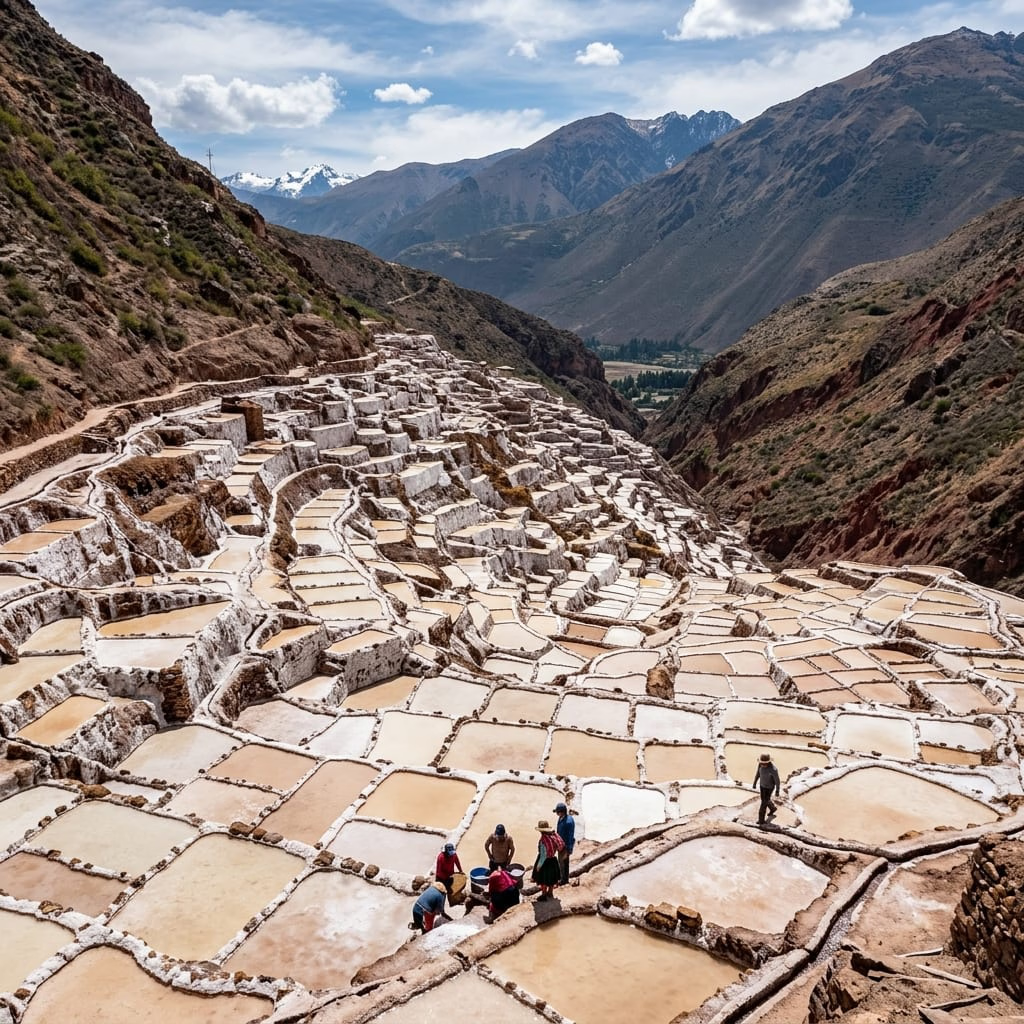
History & Background
Harvested for over 1,000 years, the pink salt of Maras is hand-gathered by local families organized in a cooperative.
What to Expect
The Maras Salt Mines are thousands of shallow evaporation pools cascading down a hillside, fed by a warm subterranean spring that has been harvested for salt since pre-Inca times. Families of the nearby communities still work the pools by hand, and the pink salt of Maras is prized by chefs worldwide. The site pairs perfectly with the Moray terraces on a half-day Sacred Valley tour.
How to Arrive
A 1.5-hour drive from Cusco in the Sacred Valley. Often combined with Moray on a half-day tour.
Practical Travel Tips
- Buy authentic Maras pink salt as a culinary souvenir.
- Bring sunglasses due to sun glare off the salt pools.
- Separate entry fee.
Frequently Asked Questions
How do I visit Maras and Moray together?
They are 15 minutes apart by car and are usually combined on a half-day tour from Cusco or Urubamba. Your hotel can arrange transport and a driver.
Are the salt mines included in the Boleto Turistico?
No — Maras and Moray each have a separate entrance fee (around 10–15 soles at Maras).
Can I buy the pink salt?
Yes — local families sell bags of pink salt and salt products at the entrance and in the village; it makes an excellent souvenir.
Continue Exploring Cusco
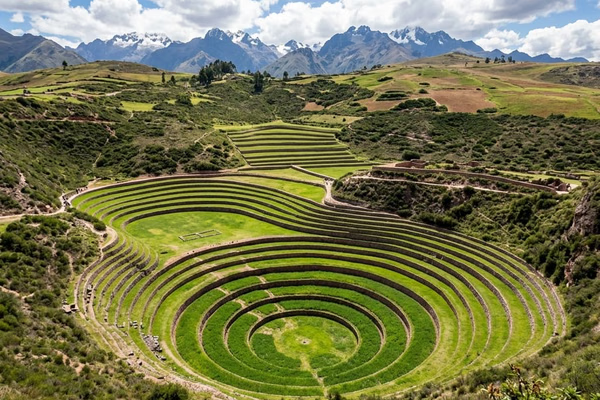
Moray Archaeological Site
Striking concentric circular agricultural terraces designed by the Incas to simulate varied microclimates.
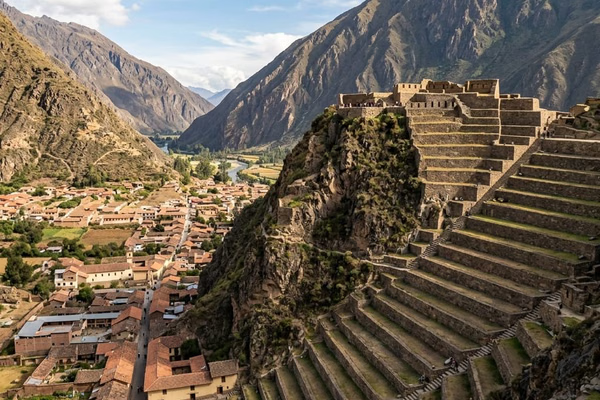
Ollantaytambo
A living Inca town featuring a monumental fortress and terraces, serving as the main train station to Machu Picchu.
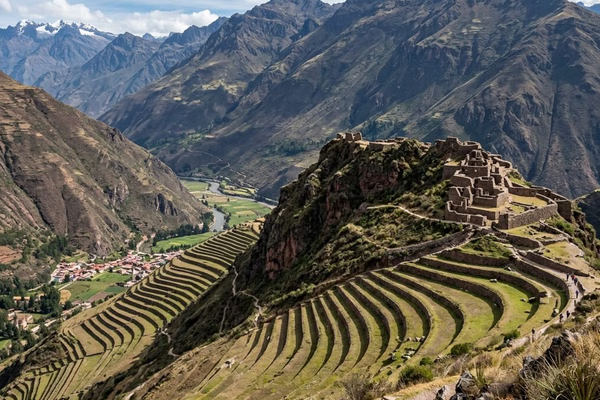
Pisac Archaeological Site & Market
A vast hilltop archaeological complex paired with a famous artisan market down in the valley town.